Spanish explorers observed the use of psilocybin-containing mushrooms (teonanacatl) in Mexico as early as 1519 with the arrival of Hernán Cortés. The use of hallucinogenic snuffs by indigenous South American people was first observed by Western explorers like Christopher Columbus as early as 1496. The earliest archeological evidence of the use of psychedelic plants and fungi by humans dates back roughly 10,000 years. Psychedelics occurring in plants, fungi, and animals have been used by indigenous peoples throughout the world for thousands of years. In contrast to phenethylamines and amphetamines generally, most psychedelic phenethylamines are not monoamine releasing agents. Tryptamines are derivatives of tryptamine and are structurally related to the monoamine neurotransmitter serotonin (also known as 5-hydroxytryptamine or 5-HT).
Hallucinogen-perception Persisting Disorder (HPPD)
In July 2022, though, under the United States Food and Drug Administration, the drug psilocybin was on track to be approved of as a treatment for depression, and MDMA as a treatment for post-traumatic stress disorder. In addition, many countries have analogue laws; for example, in the United States, the Federal Analogue Act of 1986 automatically forbids any drugs sharing similar chemical structures or chemical formulas to prohibited substances if sold for human consumption. Robin Carhart-Harris and Guy Goodwin write that the term psychedelic is preferable to hallucinogen for describing classical psychedelics because of the term hallucinogen's "arguably misleading emphasis on these compounds' hallucinogenic properties." It is irregularly derived from the Greek words ψυχή (psychḗ, meaning 'mind, soul') and δηλείν (dēleín, meaning 'to manifest'), with the intended meaning "mind manifesting" or alternatively "soul manifesting", and the implication that psychedelics can reveal unused potentials of the human mind. A so-called "psychedelic renaissance", in which interest in psychedelics has resurged, began in the late 2010s and early 2020s. Shortly thereafter, it was found that LSD showed serotonin-like effects and could antagonize serotonin in certain assays.
Is Microdosing A Placebo? A Rapid Review Of Low-dose LSD And Psilocybin Research
Hofmann discovered its effects in humans on April 16, in 1943, after unintentionally ingesting an unknown amount, possibly absorbing it through his skin. A notable bioisostere of LSD is JRT, the isotryptamine analogue of LSD and a psychedelic and psychoplastogen which is under investigation for the potential treatment of schizophrenia. Maximum plasma concentrations are typically observed 1.4 to 1.5 hours after oral administration of 100 μg and 200 μg, respectively, with a plasma half-life of approximately 2.6 hours (ranging from 2.2 to 3.4 hours among test subjects).
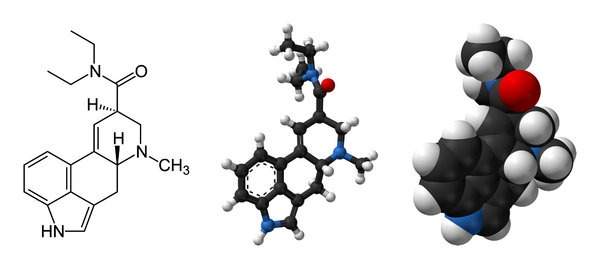
On April 19, 1943, Hofmann ingested 0.25 milligrams (250 micrograms) of the substance, which he estimated to be a small dose, but is actually about 10 times the minimum amount that produces a psychedelic effect. Harvard University psychologists Timothy Leary and Richard Alpert (who is now known as Ram Dass) were two of the most well-known psychedelic drug researchers during this time period. LSD (lysergic acid diethylamide) is a powerful hallucinogenic drug that alters mood, perception, and thought.
- DEA agent Karl Nichols showcased suspicious phone records and financial transactions of Pickard's.
- The most popular names—hallucinogen, psychotomimetic, and psychedelic ("mind manifesting")—have often been used interchangeably.
- He has been open about having taken LSD many times himself, but was always opposed to the growing use of LSD amongst members of the counterculture movement.
- Ergine, also known as lysergic acid amide (LSA) or as lysergamide, is a ergoline and lysergamide.
- LSD began to experience a decline in popularity in both scientific and casual use during the 1970s.
Psychedelic Experience
Furthermore, psychedelic drugs have a history of religious use across the world that extends back for hundreds or perhaps thousands of years. Entropic brain theory is a theory of consciousness proposed in 2014 by neuroscientist Robin Carhart-Harris and colleagues that was inspired by research on psychedelic drugs. Despite the many similarities that were observed between experiences of psychedelics and psychosis in the past, contemporary psychosis and psychedelic research highlight some features more than others (since they have different goals and assumptions), such as mysticism, connectedness, awe, peace, ego dissolution, hallucinations, suspiciousness, disorganization, hostility, grandiosity, and withdrawal. Some research suggests that the risk of a bad trip on psilocybin is higher when multiple drugs are used, when the user has a history of certain mental illnesses, and when the user is not supervised by a sober person.
Gordon Todd Skinner
The DEA claimed they led the local drug market for marijuana (including hashish) and cocaine. According to testimony Skinner later gave in court, he tried over 163 types of drugs in his life. Skinner grew up in Tulsa, Oklahoma, and started manufacturing various drugs in high school. The psychedelic effects of N(6)-substituted lysergamides were reported by Alexander Shulgin in 1986 and thereafter.
Psychedelic Experiments And Experiences
The psychoactive effects of LSD were first discovered in 1943 by Albert Hofmann at Sandoz Laboratories (Switzerland). The mechanism of action is not fully known, although serotonin binding activity is thought to be involved. It is perhaps the most researched and culturally influential psychedelic substance, as well as the prototypal lysergamide.
Use And Effects
The first mention of a plague of gangrenous ergotism in Europe comes from Germany in 857; following this, France and Scandinavia experienced similar outbreaks; England is noticeably absent from the historical regions affected by ergotism as its main source of food was wheat, which is resistant to ergot fungi. The January 4, 2007 issue of the New England Journal of Medicine includes a paper that documents a British study of more than 11,000 Parkinson's disease patients. Ergot extract has been used in pharmaceutical preparations, including ergot alkaloids in products such as Cafergot (containing caffeine and ergotamine or ergoline) to treat migraine headaches, and ergometrine, used to induce uterine contractions and to control bleeding after childbirth.
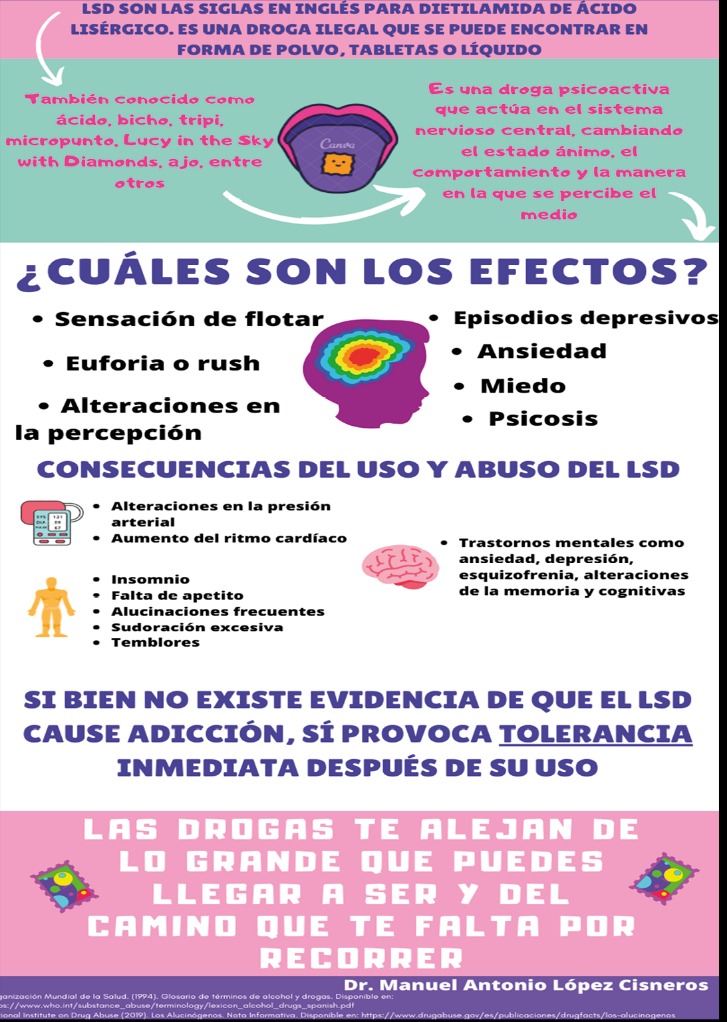
It has been said that some people who use LSD can end up with damage to their chromosomes, but this is a myth based on one wrong report that was disproven soon after it was published. In some rare cases, people taking LSD develop a psychosis. When people are impaired, they may have accidents or do things that they would not normally do.
- Lysergic acid can also be produced synthetically, although these processes are not used in clandestine manufacture due to their low yields and high complexity.
- Most deaths tied to LSD are almost always from falls, car crashes, and other accidents — not from the acid itself.
- On December 26, 1968, Leary was arrested again in Laguna Beach, California, this time for the possession of two marijuana "roaches".
- Insects, including flies and moths, carry conidia of Claviceps species, but it is unknown whether insects play a role in spreading the fungus from infected to healthy plants.
- Selective serotonin 5-HT2A receptor agonists are expected to avoid the cardiac risks of serotonin 5-HT2B receptor activation.
- Significant adverse reactions were experienced by participants including cardiotoxicity, QT prolongation, ataxia, psychosis, and several fatalities were reported due to toxic adverse events.
Influential Individuals
Mankind has known about Claviceps purpurea for a long time, and its appearance has been linked to extremely cold winters that were followed by rainy summers.citation needed Since birth control devices and abortifacients were illegal to market and sell at the time, they were offered to women who were "delayed". David Hosack, an American physician, noted the large number of stillbirths resulting from ergot use and stated that rather than pulvis ad partum, it should be called pulvis ad mortem. So if the fetus did not move as expected, the drug could cause the uterus to mold itself around the child, rupturing the uterus and killing the child. However, until anesthesia became available, there was no antidote or way of controlling the effects of ergot. It is not clear if oral ergot alkaloids are beneficial or harmful as they have not been well studied.
As additional examples, DiPT is said to primarily affect the auditory sense, 2C-T, 2C-T-17, MiPT, and ASR-3001 (5-MeO-iPALT) are said to produce psychedelic effects on thinking or "head space" with few or no visuals, and N-methyltryptamine (NMT) is said to be a spatial psychedelic. It has been proposed that psychedelics used for therapeutic purposes may act as active "super placebos". The United States Food and Drug Administration has granted breakthrough therapy status, which expedites the assessment of promising drug therapies for potential approval, to psilocybin therapy for treatment-resistant depression and major depressive disorder. On the basis of favorable early results, ongoing research is examining proposed psychedelic therapies for conditions including major depressive disorder, and anxiety and depression linked to terminal illness. As of 2022, the body of high-quality evidence on psychedelic therapy remains relatively small and more, larger studies are needed to reliably show the effectiveness and safety of psychedelic therapy's various forms and applications.
Green's Torture
ALD-52 is a class A controlled drug, and is illegal to traffic, manufacture, import, export, possess, or consume in Singapore as of December 1, 2019, punishable with a minimum of five years' imprisonment and five strokes of the cane. Although it is not officially scheduled, it is controlled as an LSD structural analog due to an amendment made on June 1, 2015. However, this was not definitely confirmed until formal studies were done in the 2010s and 2020s.
These developments have led to calls for independent oversight, greater funding transparency, and more inclusive governance models to protect the integrity of psychedelic science and practice. Broader concerns have been raised about how financial entanglements could influence research agendas and regulatory frameworks. Observers argue that this overlap between activism, research, and commercial interest may compromise objectivity in public discourse and trial reporting. Rick Doblin has faced criticism for his dual role as both an advocate and the head of an organization poised to benefit financially from the potential FDA approval of MDMA-assisted therapy. The conference featured over 300 speakers, including academic researchers, therapists, entrepreneurs, and policy advocates. Further concerns emerged from the 2023 Psychedelic Science conference in Denver, Colorado, hosted by MAPS and the Multidisciplinary Association for Psychedelic Studies Public Benefit Corporation (MAPS PBC). and drug residues typically play no significant role in their occurrence and recurrence. Jimson weed is highly toxic and can cause delirium, confusion, hallucinations, blurred vision, photophobia, dry mouth, urinary retention, hyperthermia, incoordination, hypertension, and rapid heartbeat among other effects. Aside from these superficial similarities, the two plants are not related, do not resemble one another, and are very unlikely to be confused. Historically, and possibly related to the "Reefer Madness" legend, some people (particularly Americans) had confused cannabis with Jimson weed (Datura stramonium). In fact, some studies indicate THC to have anticancer properties, with studies showing tumor reduction in mice.|Almost all of Leary's participants reported profound mystical experiences which they felt had a tremendously positive effect on their lives. Leary began conducting experiments with psilocybin in 1960 on himself and a number of Harvard graduate students after trying hallucinogenic mushrooms used in Native American religious rituals while visiting Mexico. Following Wasson's report, Timothy Leary visited Mexico to experience the mushrooms. This prompted Albert Hofmann to isolate psilocybin in 1958 for distribution by Sandoz with its product LSD in the U.S., further raising interest in LSD in the mass media. He became known as the original "Captain Trips", travelling about with a leather case containing pharmaceutically pure LSD, mescaline, and psilocybin.|Beginning in 1967, studies raised concerns that LSD might produce genetic damage or developmental abnormalities in fetuses. There is an urban legend that a person who has used LSD more than seven times is automatically declared legally insane. Therefore, there is no plausible motivation for a drug dealer to distribute LSD in this manner. The flyer lists an inaccurate description of the effects of LSD, some attribution (typically to a well-regarded hospital or a vaguely specified "adviser to the president"), and instructs parents to contact police if they come across the blue star tattoos. This legend frequently surfaces in American elementary and middle schools in the form of a flyer that has been photocopied through many generations, which is distributed to parents by concerned school officials. This book claimed "Musa sapientum Bananadine" was a mild psychoactive drug found in banana peels.|The results of the study found that 100 μg was the optimal dose to reduce anxiety among the studied patients. As the drug is illegal in many areas of the world, potential medical uses have historically been difficult to study. One study concluded, "The root of the therapeutic value of the LSD experience is its potential for producing self-acceptance and self-surrender," presumably by forcing the user to face issues and problems in that individual's psyche. The DEA performed a chromatographic analysis of blotter paper containing 2C-C which showed that the paper contained a much greater concentration of the active chemical than typical LSD doses, although the exact quantity was not determined. While it is true that LSD requires lower doses than most other hallucinogens, blotter paper is capable of absorbing a much larger amount of material.|It is estimated, based on animal studies and human case reports, that the lethal dose of LSD in humans is approximately 100 mg, or about 1,000 times the usual recreational dose of 100 μg. In contrast to certain other psychedelics, MAOIs do not inhibit the metabolism of or potentiate the effects of LSD and instead reduce its effects. Some psychedelics, including LSD, are metabolized by the cytochrome P450 enzyme CYP2D6. Research appears to be mixed on whether LSD is a potent serotonin 5-HT2B receptor agonist or not, with some studies finding it to be essentially inactive. Flashbacks are psychological episodes where individuals re-experience some of LSD's subjective effects after the drug has worn off, persisting for days or months post-hallucinogen use.}
According to psychedelic researcher Matthew J. Baggott in 2023, the first documented instance of psychedelic microdosing may be the Grateful Dead's use of low and sub-psychedelic doses of DOM as a mild stimulant in the late 1960s. Selective serotonin 5-HT2B receptor antagonism has been found to fully prevent the cardiotoxicity of dexnorfenfluramine in animal studies, but clinical studies are needed. More research is needed to determine whether long-term frequent use of psychedelics, including microdosing, may cause cardiac valvulopathy and other related toxicities. Long-term use of potent serotonin 5-HT2B receptor agonists like fenfluramine, methysergide, ergotamine, cabergoline, pergolide, and MDMA is known to produce serious organ toxicity including cardiac fibrosis, valvulopathy, and pulmonary hypertension.
Users following a specific guided trip protocol experienced a variety of benefits including increased purpose, more energy for work, more initiative, getting more work done, increased self-confidence, marriage satisfaction, and more friends at and outside work.15 16 See the first few images on this page for an accurate depiction of low to moderate acid dosage visual effects. All drugs can still be harmful under certain circumstances.4 “There is no evidence of such potential neurotoxic effects with the prototypical classical hallucinogens (i.e. LSD, mescaline and psilocybin).”5 “The incidence of risky behavior or enduring psychological distress is extremely low when psilocybin is given in laboratory studies to screened, prepared, and supported participants.”8 even believe that an emetic chemical is purposely added to the seeds to prevent people from ingesting them, but that has never been proven.citation needed One 1964 article states that reported adverse effects must come from the seeds, as the stated insecticide is too "inocuous" to humans to be responsible. A study gave mice 3000 mg/kg with no lethal effects.citation needed|The aim was to find drugs that would bring out deep confessions or wipe a subject's mind clean and program them as "a robot agent". Once Project MKUltra started, in April 1953, experiments included administering LSD to mental patients, prisoners, drug addicts, and prostitutes – "people who could not fight back", as one agency officer put it. Documents obtained from the CIA by John D. Marks under Freedom of Information in 1976 showed that, in 1953, the CIA considered purchasing 10 kilograms of LSD, enough for 100 million doses. Phase two had 96 volunteers who were dosed with LSD in evaluation of the possibility of intelligence uses of the drug.}
The Concord Prison Experiment evaluated the use of psilocybin and psychotherapy in the rehabilitation of released prisoners. He experimented in treating alcoholism and reforming criminals, and many of his subjects said they had profound mystical and spiritual experiences that permanently improved their lives. Anthony Russo, a colleague of Leary's, had experimented with psychedelic Psilocybe mexicana mushrooms on a trip to Mexico and told Leary about it. After a fateful reunion with Ramsdell (who was assigned to Deshon General Hospital in Butler, Pennsylvania, as chief psychologist) in Buffalo, New York, he was promoted to corporal and reassigned to his mentor's command as a staff psychometrician.